

 MUHA MEDS HASH ROSIN CONCENTRATE
 MUHA MEDS PIATELLA EXTRACT
The Anxious Mind: How Marijuana Might Help (or Harm)


Understanding the Connection Between Cannabis and Anxiety Relief
Marijuana for anxiety has become one of the most talked-about topics in mental health and cannabis circles. Here’s what you need to know right away:
Quick Answer: Does marijuana help with anxiety?
- CBD appears to reduce anxiety at all tested doses without causing intoxication
- THC can reduce anxiety at low doses (1-5mg) but may increase anxiety at higher doses
- Research shows mixed results, with 70% of high-quality studies reporting positive improvements
- It’s not recommended as a first-line treatment, and professional medical guidance is essential
- Individual responses vary significantly based on dosage, ratio of compounds, and personal factors
The numbers tell a compelling story. According to the National Institute of Mental Health, 31.1% of U.S. adults will experience an anxiety disorder at some point in their lives. Yet only 46% of those affected receive treatment, often due to stigma, cost barriers, or unsatisfactory results from traditional medications. This treatment gap has led many to explore alternatives—and cannabis has emerged as a particularly controversial option.
The conversation around marijuana for anxiety isn’t simple. While 58.1% of medical marijuana users in one Washington State study reported using it specifically for anxiety, and countless individuals share anecdotes of relief, the scientific evidence remains complex and sometimes contradictory. The key lies in understanding that cannabis isn’t one single thing—it’s a plant containing over 140 different compounds, with THC (the compound that gets you “high”) and CBD (a non-intoxicating compound) being the two most studied.
I’m Mark, and I’ve spent years at Muha Meds helping people understand how different cannabis products affect anxiety and overall wellness, always emphasizing the importance of quality, transparency, and informed choices when considering marijuana for anxiety. Let me walk you through what current research actually shows—both the potential benefits and the very real risks.
The Science Behind Cannabis and Your Brain
To truly understand how marijuana for anxiety might work, we need to peek inside your own body at an incredible system you probably didn’t know you had: the endocannabinoid system.
How Cannabis Interacts with Your Body’s Anxiety Controls
Here’s something fascinating: your body already produces its own cannabis-like compounds. No kidding. This network of receptors and naturally occurring chemicals is called the Endocannabinoid System (ECS), and it’s been quietly working behind the scenes your entire life.
Think of the ECS as your body’s master regulator—a biological balancing act that keeps everything running smoothly. It influences your mood, sleep quality, appetite, how you think, and even how your immune system responds. Most importantly for our conversation, it plays a crucial role in how you process fear, anxiety, and stress.
The system has three main players. First, there are endocannabinoids like anandamide (sometimes called the “bliss molecule”—and yes, that’s its actual nickname). Then you have cannabinoid receptors, primarily CB1 and CB2, scattered throughout your body. Finally, there are enzymes that break down these compounds when your body’s done using them.
When stress or anxiety hits, your ECS jumps into action, working to restore balance. Cannabis interacts with this system because its compounds—called phytocannabinoids—look remarkably similar to your body’s own endocannabinoids. It’s like giving your natural system a boost, for better or worse.
CB1 receptors live mostly in your brain and central nervous system. THC binds directly to these receptors, which explains its psychoactive effects and why it can influence the neurotransmitters involved in mood and stress responses. CB2 receptors, on the other hand, hang out primarily in your immune system and peripheral tissues. While THC interacts with CB2 receptors too, CBD takes a different approach—it barely binds to either CB1 or CB2 directly. Instead, CBD works more subtly, influencing the system indirectly.
One fascinating mechanism: CBD can inhibit the enzyme that normally breaks down anandamide. This means your natural “bliss molecule” sticks around longer, potentially contributing to improved mood. Meanwhile, research shows that microdosing THC can activate the 5HT1A serotonin receptor, which is associated with anxiety relief. CBD may also improve how your serotonin receptors function, contributing to mood stabilization and better focus.
Scientific research on the endocannabinoid system’s role in stress points to its significant involvement in guarding against fear, anxiety, and stress. Scientists are increasingly excited about the ECS as a target for novel anxiety medications, suggesting a profound connection between cannabis, our internal chemistry, and mental well-being.
This interplay between cannabis compounds and your body’s natural anxiety controls helps explain why marijuana for anxiety isn’t a simple yes-or-no question—it’s a nuanced conversation about chemistry, dosage, and individual biology.

THC vs. CBD: A Tale of Two Cannabinoids
When people talk about marijuana for anxiety, they’re usually talking about two very different compounds: THC and CBD. While both come from the same plant, their effects on anxiety—and your body—couldn’t be more different.
| Feature | THC (Tetrahydrocannabinol) | CBD (Cannabidiol) |
|---|---|---|
| Psychoactive | Yes, it causes the “high” | No, it is non-intoxicating |
| Anxiety Effect | Biphasic: low doses may reduce, high doses may increase | Consistently reduces anxiety at all tested doses |
| Primary Receptors | Binds strongly to CB1 receptors in the brain | Minimal direct binding to CB1/CB2, acts indirectly |
| Side Effects | Paranoia, increased heart rate, sedation, impaired cognition | Generally well-tolerated, mild side effects (diarrhea, fatigue) |
| Addictive Potential | Can lead to dependence in some individuals | Not considered addictive |
| Modulation | CBD can moderate THC’s psychoactive and anxiety-inducing effects | – |
THC is the famous one—the compound responsible for the “high” that cannabis is known for. It binds directly to those CB1 receptors in your brain, leading to altered perception, euphoria, and sometimes deep relaxation. Sounds great, right?
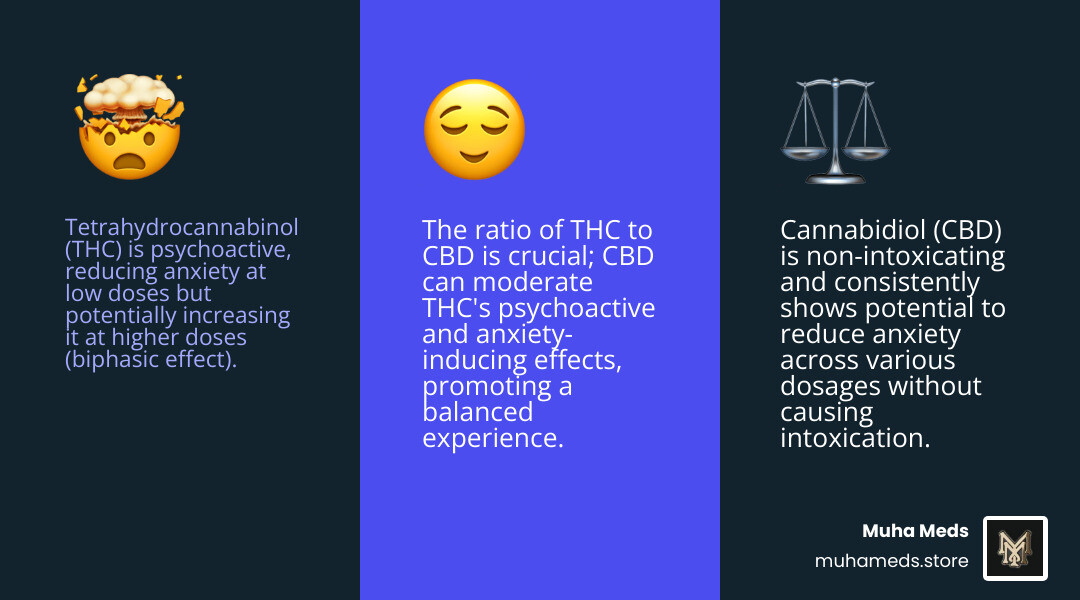
Here’s the catch: THC has what scientists call a biphasic effect on anxiety. This is absolutely crucial to understand. At lower doses—we’re talking 1-5mg—THC may actually reduce anxiety and help you feel calm. But bump up that dose, and THC can flip the script entirely. Higher amounts can intensify anxiety, trigger paranoia, and even cause full-blown panic attacks in some people.
It’s like THC has a split personality. A little bit might be your friend, but too much becomes the unwelcome guest at your party. This dose-dependent response is exactly why precision and caution matter so much when considering THC-containing products for anxiety relief.
CBD, meanwhile, is the calm, collected cousin who never gets drunk at family gatherings. It doesn’t produce a “high” and won’t leave you feeling intoxicated. Research consistently shows that CBD appears to decrease anxiety at all doses tested—no biphasic surprises. It offers a more predictable anxiolytic (anxiety-reducing) effect, which is why many people prefer it for daytime use or when they need relief without impairment.
CBD’s mechanisms are fascinating. It can influence serotonin receptors, which play a major role in mood regulation. Even more interesting, CBD can actually modulate THC’s effects. When you consume CBD and THC together, the CBD helps temper some of THC’s potential anxiety-inducing side effects. It’s like CBD acts as a safety net, leading to a more balanced and potentially therapeutic experience.
This is why the CBD-to-THC ratio matters so much in products designed for anxiety relief. A higher CBD ratio can provide the calming benefits while minimizing the risk of THC’s unwanted effects.
The distinction between these two cannabinoids is vital for anyone exploring marijuana for anxiety. Understanding their individual effects and how they interact is your first step toward making informed, safe choices. If you’re curious about how different cannabis types affect relaxation and sleep, check out our guide on Does Indica or Sativa Make You Sleepy.
A Deep Dive into Using Marijuana for Anxiety
So you’re curious about using cannabis for anxiety—but where do you even start? It’s not as simple as just lighting up and hoping for the best. The truth is, getting marijuana for anxiety right involves understanding some important details about dosage, the balance between different compounds, and even which products might work best for your unique situation.
Let me walk you through what actually matters when you’re trying to find relief.
Finding the Right Balance: Dosage, Ratios, and Strains
Here’s the thing about using marijuana for anxiety: the difference between feeling calm and feeling more anxious can literally come down to a few milligrams. That’s why understanding dosage, the ratio of CBD to THC, and the specific characteristics of different cannabis products is so crucial.
When Less Actually Gives You More
If you’ve been around cannabis culture, you might think more THC equals better results. But when it comes to anxiety, that’s often backwards. This is where microdosing becomes your best friend.
Microdosing means taking very small amounts of THC—we’re talking 1 to 2.5 milligrams. At these tiny doses, something interesting happens: THC can activate specific serotonin receptors in your brain (the 5HT1A receptors) that help reduce anxiety, without making you feel high or foggy. You get the therapeutic benefit without the psychoactive effects that might interfere with your day.
I’ve talked to countless people who started with just 1mg of THC and were amazed at the difference it made for their stress levels, especially in situations that normally triggered their anxiety. The key is starting at that lowest dose and only increasing gradually—maybe by another milligram every few days—until you find your sweet spot. You want to feel the relief without feeling intoxicated.
The Magic of Getting Your Ratios Right
Now, let’s talk about one of the most important factors in using marijuana for anxiety successfully: the CBD to THC ratio. This might be the single most critical thing to get right.
Remember how we discussed that THC has that tricky biphasic effect—helpful at low doses but potentially anxiety-inducing at higher ones? Well, CBD acts as a natural moderator. It can actually buffer against THC’s tendency to cause anxiety or paranoia. That’s why products with higher CBD content, or those with a balanced 1:1 ratio of CBD to THC, tend to work better for anxiety relief.
Here’s something worth knowing: over the past twenty years, cannabis products have shifted dramatically toward higher THC and lower CBD content. This market trend has inadvertently increased anxiety risks for many users. When you’re specifically seeking anxiety relief, you want to swim against that current and deliberately choose products with meaningful CBD levels.
The Golden Rule You Can’t Ignore
“Start low and go slow” isn’t just something we say to sound cautious—it’s genuinely the smartest approach to using marijuana for anxiety. Your body’s response to cannabis is unique to you. What works for your friend might be too much or too little for you.
Begin with the smallest possible dose, especially when THC is involved. Then wait. Give it time to work—sometimes an hour or more with edibles, less with inhalation. Pay attention to how you feel. If you don’t get the relief you’re looking for, increase the dose slightly next time. This patient, methodical approach helps you find your personal therapeutic window while minimizing the chance of unwanted side effects.
Understanding Indica, Sativa, and What Really Matters
You’ve probably heard people talk about Indica strains being relaxing and Sativa strains being energizing. There’s some truth to these traditional categories, but the reality is more nuanced.
Indica strains are typically associated with relaxation and sedation, making them popular evening choices for unwinding after a stressful day or dealing with anxiety-related sleep issues. Sativa strains, on the other hand, are known for uplifting, energizing effects that some people use for daytime stress relief and maintaining focus. Hybrid strains blend characteristics of both.
But here’s what I really want you to understand: the specific cannabinoid and terpene profile of a strain matters far more than whether it’s labeled Indica or Sativa. Many high-CBD strains work wonderfully for anxiety regardless of their classification. The Indica versus Sativa distinction gives you a general starting point, but don’t let it be your only guide.
Does Indica or Sativa Make You Sleepy
The Aromatic Compounds That Make a Difference
Beyond CBD and THC, cannabis contains aromatic compounds called terpenes that contribute to its smell, taste, and therapeutic effects. Some of these terpenes are particularly valuable for managing anxiety.
D-limonene, which you’ll find in citrus fruits and certain cannabis strains, has been shown in research to significantly reduce THC-induced anxiety and paranoia. It adds a calming dimension to the overall effect. Myrcene is known for its sedative properties and can improve relaxation and stress relief. Linalool, also found in lavender, brings calming and anti-anxiety effects. Beta-caryophyllene interacts with CB2 receptors and offers both anti-inflammatory and anxiolytic properties.
When you’re choosing products at Muha Meds, looking at the terpene profile alongside the CBD:THC ratio gives you a much clearer picture of how that product might help with your anxiety. These aromatic compounds work together with cannabinoids in what scientists call the “entourage effect,” creating a synergy that’s greater than the sum of its parts.
Does Indica or Sativa Make You Sleepy Image
Potential Risks and Who Should Avoid Marijuana for Anxiety
I need to be completely honest with you: while marijuana for anxiety shows promise for some people, it’s not without risks. For certain individuals, cannabis can actually make anxiety worse or create serious health concerns.
When Cannabis Backfires
The most documented risk, particularly with high-THC products, is that cannabis can actually increase anxiety rather than relieve it. We’ve discussed THC’s biphasic nature—that sweet spot at low doses where it helps, versus higher doses where it can trigger fear, panic, and heightened anxiety. This isn’t just uncomfortable; it can be genuinely distressing, especially when you’re already struggling with anxious feelings.
Research from Johns Hopkins Medicine found that even though compounds like d-limonene can help reduce THC-induced anxiety, the risk remains real. And with today’s cannabis market offering strains with 20-30% THC content, it’s easier than ever to accidentally consume too much.
Some people also experience paranoia with higher THC doses—that unsettling feeling that something’s wrong or that people are watching or judging you. If you’re using cannabis to feel less anxious and it’s making you feel more paranoid, that’s obviously counterproductive.
What Happens with Long-Term Use
When we look at long-term, heavy use of cannabis—especially high-THC products—several potential concerns emerge. Your body can develop tolerance, meaning you need progressively more to achieve the same effect. This can lead to psychological dependence, where you feel like you need cannabis just to cope with daily life or function normally.
While this isn’t the same as physical addiction to substances like opioids, it can still significantly impact your quality of life and well-being. Chronic cannabis use may also lead to blunted stress responses, potentially altering how your endocannabinoid system naturally functions over time.
Epidemiological research suggests something even more concerning: chronic cannabis use can actually worsen the course of pre-existing mood disorders, anxiety disorders, and bipolar disorder. If you’re using marijuana for anxiety but have underlying mental health conditions, you might inadvertently be making those conditions harder to manage in the long run.
A report on THC’s biphasic effects on anxiety provides detailed information about these dosage-dependent effects and why caution is so important.
Who Should Definitely Avoid Cannabis for Anxiety
For certain groups, the risks of using marijuana for anxiety simply outweigh any potential benefits. If you fall into any of these categories, cannabis is generally not recommended:
Adolescents and young adults with still-developing brains are particularly vulnerable to cannabis’s effects. Early and heavy use, especially of high-THC products, can impact brain development and increase the risk of long-term mental health issues. The adolescent brain is still forming crucial connections, and introducing cannabis during this critical period can have lasting consequences.
Pregnant individuals should avoid cannabis entirely. Research on prenatal cannabinoid exposure shows emerging evidence of physiological and neuropsychiatric abnormalities in offspring. The potential harm to the developing fetus makes this a clear situation where cannabis should be avoided.
If you have a history of psychosis or a family history of psychotic disorders like schizophrenia, cannabis—particularly high-THC products—can be dangerous. THC can induce psychotic symptoms or worsen existing ones. This isn’t a minor risk; it’s a serious concern that could trigger or exacerbate severe mental health episodes.
For those with diagnosed psychiatric disorders such as bipolar disorder or severe depression, studies have shown that THC administration can lead to dysphoric reactions, panic, and even psychotic disturbances. If you have bipolar disorder, cannabis use can worsen the course of your illness, making mood swings more severe and harder to manage.

When Cannabis Meets Other Medications
Here’s something many people don’t realize: cannabis can interact with various prescription medications, sometimes in ways that intensify side effects or reduce how well your medications work.
If you’re taking sedatives or anti-anxiety medications like benzodiazepines (Diazepam, Ativan, Xanax), combining them with cannabis can exaggerate their sedative effects. This means excessive drowsiness, impaired coordination, and a significantly increased risk of accidents. The combination can be genuinely dangerous, especially if you’re driving or operating machinery.
Cannabis, particularly CBD, can also affect how your liver processes medications. CBD inhibits certain liver enzymes (the CYP450 system) that metabolize many drugs, including some antidepressants like citalopram and escitalopram, and anti-seizure medications like clobazam and topiramate. When these enzymes are inhibited, you can end up with higher-than-intended levels of these medications in your bloodstream, which increases the risk of side effects—sometimes serious ones.
This is why it’s absolutely essential to talk with a healthcare professional before combining cannabis with any prescription medications. They can help you understand potential interactions and adjust dosages if necessary to keep you safe.
How Different Anxiety Disorders May Respond
Not all anxiety is the same. The way you experience anxiety—whether it’s constant worry, social fear, trauma-related distress, or intrusive thoughts—can influence how cannabis might help (or not help) you.
Current research suggests that different types of anxiety disorders may respond uniquely to cannabis, with CBD generally showing more promise and fewer risks than THC across the board. Let’s look at what we know about specific conditions.
Generalized Anxiety Disorder (GAD) is characterized by persistent, excessive worry about everyday things—work, health, family, finances. It’s that nagging feeling that something bad is going to happen, even when there’s no real reason to think so. Preliminary research suggests that medicinal cannabis, particularly CBD-dominant products, may improve GAD symptoms, overall quality of life, and sleep. The calming effects of CBD could offer relief from that chronic worrying that makes daily life exhausting. While we need more robust studies, the early signs are encouraging for people with GAD.
Social Anxiety Disorder (SAD) involves intense fear and self-consciousness in social situations. If you have SAD, everyday interactions like meeting new people, speaking in groups, or even eating in public can feel overwhelming. Some research indicates that CBD may be particularly helpful here. Studies have shown that a single dose of CBD before a stressful social situation reduced anxiety in people with social anxiety disorder, and daily CBD for four weeks showed modest symptom improvements in adolescents. Research on CBD for social anxiety highlights its potential to reduce anxiety during public speaking, a common trigger for SAD.
Interestingly, SAD is also an anxiety disorder that’s been linked to problematic marijuana use, suggesting a complicated relationship where some people might self-medicate but potentially create other issues. This underscores the importance of professional guidance rather than simply self-treating.
Post-Traumatic Stress Disorder (PTSD) can cause severe anxiety, flashbacks, nightmares, and irritability following a traumatic event. The evidence here is still developing, but some studies are promising. One small crossover trial involving 10 patients with PTSD found that THC (specifically, a synthetic form called nabilone) added to standard treatment reduced self-reported nightmares. Preliminary research also indicates that CBD capsules or sprays can reduce some PTSD symptoms like flashbacks, irritability, and difficulty sleeping.
These findings are particularly meaningful for symptom management, though we should be clear that cannabis isn’t replacing evidence-based PTSD treatments like trauma-focused therapy. It might, however, offer additional relief for some of the most distressing symptoms.
Obsessive-Compulsive Disorder (OCD) involves unwanted, intrusive thoughts (obsessions) and repetitive behaviors (compulsions) that you feel driven to perform. For OCD, the research is even more limited, but some studies suggest that inhaling cannabis can have short-term beneficial effects—specifically, a reduction in compulsions, intrusions, and anxiety.
The catch? This relief appears to be temporary, and tolerance can develop, meaning the effects might diminish over time with repeated use. OCD is also one of the more treatment-resistant anxiety disorders, so while cannabis might offer some symptom relief, it’s unlikely to be a standalone solution.
What’s clear from looking at these different conditions is that while some types of anxiety show more promising responses to cannabis—especially CBD—we’re still in the early stages of understanding these relationships. These aren’t definitive treatments but areas of active research and potential adjunctive therapies that might work alongside conventional treatments.
If you’re considering marijuana for anxiety for a specific anxiety disorder, understanding these nuances can help you have more informed conversations with your healthcare provider about whether it might be worth exploring.
Practical and Safe Use: A How-To Guide
If you’re considering marijuana for anxiety, you’re making a decision that deserves thoughtfulness, care, and the right guidance. This isn’t about simply picking up a product and hoping for the best—it’s about approaching cannabis as a tool that requires understanding, respect, and most importantly, professional input. Let me walk you through the essential steps to ensure you’re doing this safely and responsibly.
The First Step: Consulting a Healthcare Provider
I can’t stress this enough: talking to a healthcare provider before using marijuana for anxiety is absolutely essential. I know it might feel tempting to skip this step, especially if you’ve heard success stories from friends or online communities, but your safety and well-being depend on getting personalized medical advice.

Why is professional medical advice so important? Because cannabis affects everyone differently. What works beautifully for your friend might not work for you—or worse, it could interact with medications you’re taking or exacerbate an underlying condition you didn’t even know you had. A healthcare provider can look at your complete health picture and help you understand whether cannabis is a reasonable option to explore for your specific anxiety situation.
When you sit down with your doctor, be completely open about your existing health conditions and all medications you’re currently taking. This includes prescription medications, over-the-counter drugs, supplements, and even herbal remedies. Remember our earlier discussion about how cannabis can interact with sedatives, antidepressants, and other psychiatric medications? Your doctor needs this full picture to identify potential drug interactions and keep you safe. This conversation should also include any history of mental health conditions, substance use, or family history of psychotic disorders.
Now, not all healthcare providers are equally familiar with cannabis as a therapeutic option. Finding a cannabis-knowledgeable clinician can make a world of difference. Look for a doctor who understands cannabinoid medicine and can offer informed guidance on appropriate products, dosages, CBD:THC ratios, and administration methods. If your current doctor isn’t well-versed in this area, don’t hesitate to ask them for resources, educational materials, or even a referral to someone who specializes in medical cannabis. Many states with medical marijuana programs have directories of certified physicians.

Honesty is your best policy here. If you’ve already tried cannabis or are currently using it, tell your doctor. There’s no judgment in a good medical relationship—only the shared goal of keeping you healthy. Your doctor can monitor your progress, adjust recommendations as needed, and ensure that cannabis is integrated responsibly into a comprehensive anxiety management plan that might also include talk therapy, lifestyle changes, or other treatments. Cannabis should be seen as a potential complement to traditional therapies, not a replacement for them.
Choosing and Sourcing Safe Products
Once you’ve had that crucial conversation with your healthcare provider and decided to move forward, the next challenge is navigating the cannabis marketplace. With so many products available—oils, tinctures, edibles, flowers, vapes—how do you know you’re getting something safe and effective? Let me break down the key factors that should guide your choices.
Third-party lab testing is absolutely non-negotiable. This is the single most important indicator of a quality cannabis product. Reputable companies have their products tested by independent laboratories and provide certificates of analysis (COAs) that you can access, either on their website or by request. These lab reports tell you exactly what’s in the product: the precise amounts of THC, CBD, and other cannabinoids, as well as confirmation that the product is free from harmful contaminants like pesticides, heavy metals, mold, and residual solvents. If a company can’t or won’t provide third-party lab results, that’s a major red flag—walk away.
Reading product labels carefully is your next line of defense. A quality product label should clearly state the exact amounts of THC and CBD per serving and per package. This transparency is essential for accurate dosing, especially when you’re following the “start low and go slow” principle we discussed earlier. Ideally, you’ll also see a full cannabinoid profile and terpene information, which helps you understand the potential effects and choose products that align with your anxiety management goals. Vague labeling, missing information, or products that just say “cannabis extract” without specifics should raise concerns.
Where you buy matters tremendously. For marijuana for anxiety products containing THC, licensed dispensaries are your safest bet. These establishments operate under state regulations that require product testing, accurate labeling, and quality control. Staff at licensed dispensaries can often provide helpful guidance about products, though remember they’re not a substitute for medical advice. For CBD products, which are more widely available, you’ll find them at health food stores, some pharmacies, and reputable online retailers. Wherever you shop, prioritize businesses that demonstrate a commitment to transparency and quality.
The illicit market might seem tempting—perhaps it’s more convenient or appears cheaper—but please avoid it. Unregulated products carry serious risks: they may contain dangerous contaminants, have wildly inaccurate cannabinoid levels (meaning you have no idea what dose you’re actually taking), or even contain synthetic cannabinoids that can be harmful. The potential health consequences simply aren’t worth any perceived savings or convenience.

At Muha Meds, we understand how confusing and overwhelming the cannabis market can be. That’s why we’re committed to complete transparency with our lab-tested products and clear, accurate labeling. When you’re exploring marijuana for anxiety, you deserve to know exactly what you’re putting in your body, without surprises or guesswork. Our goal is to make your journey with cannabis as safe and informed as possible, supporting you every step of the way.
Frequently Asked Questions about Marijuana and Anxiety
Let’s address some of the most common questions that come up when people are considering marijuana for anxiety. These are real concerns, and having clear answers can help us make better decisions.
Can marijuana make my anxiety worse?
Here’s the honest truth: yes, it absolutely can. While this might seem counterintuitive, especially when we’re seeking relief, high doses of THC are known to induce or worsen anxiety and paranoia in some individuals. This is that biphasic effect we’ve been talking about throughout this article.
Think of it like this: a small amount of THC might help you relax and take the edge off your worries. But push past your personal threshold—which varies from person to person—and suddenly you might find yourself experiencing heightened anxiety, irrational fears, or even full-blown panic attacks. It’s like the volume dial got turned up way too high, and instead of calming background music, you’re hearing jarring noise.
This is precisely why understanding dosage and starting with very low amounts is so critical when exploring marijuana for anxiety. What works for one person might be overwhelming for another. Our bodies and brains are unique, and our tolerance to THC can differ significantly. If you do experience increased anxiety after using cannabis, it’s a sign that you’ve either taken too much THC, chosen a product with an unfavorable THC:CBD ratio, or that cannabis might not be the right tool for your particular situation.
Is it better to use Indica or Sativa for anxiety?
This is one of the most asked questions, and the answer might surprise you. While the cannabis world has long categorized strains as Indica (relaxing and sedating) or Sativa (energizing and uplifting), the reality is more nuanced. These traditional labels can provide a general starting point, but they don’t tell the whole story.
The effects you experience from any cannabis strain are much more dependent on its specific cannabinoid profile—meaning the amounts of THC, CBD, and other compounds—and its terpene profile than simply whether it’s labeled Indica or Sativa. A high-THC Indica can still trigger anxiety in some people, while a CBD-rich Sativa might be wonderfully calming.
For anxiety specifically, we generally recommend seeking out high-CBD, low-THC strains, regardless of whether they’re classified as Indica, Sativa, or Hybrid. CBD’s consistent anxiolytic properties, combined with lower amounts of THC, tend to offer relief without the risk of exacerbating anxiety. Focus on the chemistry of what you’re consuming rather than just the strain name or category. Look at the lab reports, check the CBD:THC ratio, and consider the terpene content—those are the factors that will truly determine how the product affects your anxiety.
What are the long-term effects of using marijuana for anxiety?
This is an important question, and honestly, it’s one where we need more comprehensive research. What we do know from current studies gives us reason to approach long-term use, especially of high-THC cannabis, with caution.
Long-term, heavy use of cannabis, particularly products high in THC, can lead to several concerning outcomes. First, there’s tolerance—your body gets used to the substance, and you need progressively more to achieve the same calming effect you once felt with a smaller dose. This can easily lead to psychological dependence, where you feel like you need cannabis just to get through your day or manage normal stress. While this isn’t the same as physical addiction to substances like opioids, it can still significantly impact your quality of life and autonomy.
Chronic cannabis use might also lead to blunted stress responses over time, potentially altering how your endocannabinoid system functions naturally. Perhaps most concerning, epidemiological research suggests that ongoing heavy use can actually worsen underlying anxiety or other mental health conditions rather than help them. What started as self-medication for anxiety could, over time, make the very problem you’re trying to solve even more difficult to manage.
The reality is that we’re still learning about the long-term impacts of regular cannabis use, especially with today’s much more potent products. This is why a cautious, measured approach is essential. If you’re considering using marijuana for anxiety over an extended period, regular consultation with a healthcare provider isn’t optional—it’s necessary. They can help monitor your mental health, watch for signs of dependence or tolerance, and adjust your treatment plan as needed to keep you safe and well.
Conclusion: Making an Informed Decision
So, where does all this leave us? After diving deep into the science, the risks, the potential benefits, and the practical considerations, what’s the bottom line about marijuana for anxiety?
Here’s the truth: cannabis is neither a miracle cure nor a monster to fear. It’s a complex tool that, when understood and used responsibly, might offer relief for some people struggling with anxiety. But that’s a big “might,” and it comes with important conditions attached.
We’ve seen that CBD consistently shows promise in reducing anxiety without causing intoxication, making it a safer starting point for many. On the other hand, THC is trickier—it can be calming in small doses (think 1-5mg), but those higher doses? They can backfire spectacularly, ramping up anxiety and paranoia instead of easing it. This biphasic effect is why precision matters so much. The ratio of CBD to THC in a product isn’t just a technical detail; it’s often the difference between relief and regret.
Beyond just these two compounds, we’ve learned that terpenes like limonene and myrcene add another layer of therapeutic potential, working alongside cannabinoids to create what’s known as the “entourage effect.” Every element of the plant contributes to how it affects us.
But here’s what we cannot stress enough: consulting with a healthcare provider is absolutely non-negotiable. Cannabis isn’t something to experiment with blindly, especially when dealing with something as delicate as mental health. A knowledgeable doctor can help us understand if cannabis makes sense for our unique situation, considering our medical history, current medications, and specific type of anxiety. They can guide us on appropriate dosages, warn us about potential interactions, and monitor our response over time. Cannabis should complement—not replace—evidence-based treatments like therapy or prescribed medications.
For those who’ve had that crucial conversation with their healthcare provider and received the green light to explore marijuana for anxiety, the next critical step is sourcing high-quality, lab-tested products. This isn’t optional. Third-party lab testing ensures we’re getting exactly what the label promises—accurate cannabinoid levels and products free from pesticides, heavy metals, and other contaminants. Licensed dispensaries and reputable providers offer this transparency and safety.
At Muha Meds, we’ve built our reputation on exactly these principles: quality you can trust, transparency you can verify, and products that put your well-being first. We know that when someone reaches for cannabis to help with anxiety, they’re looking for relief, not more worry. That’s why every product we offer goes through rigorous testing, and why we’re committed to educating our community about safe, informed use.
This journey we’ve taken together through the science and practicalities of cannabis for anxiety is really just the beginning of your personal exploration. We encourage you to keep learning, to stay curious, and most importantly, to make choices that honor your health and safety.
If you’re ready to take the next step with professional guidance, you can learn more about Medical Marijuana For Anxiety and how it might fit into your wellness plan.
And when you’re ready to explore quality-tested options, we invite you to Explore our range of lab-tested cannabis products designed with your peace of mind in focus.
Remember: informed decisions are empowered decisions. You deserve relief that’s both effective and safe.


